
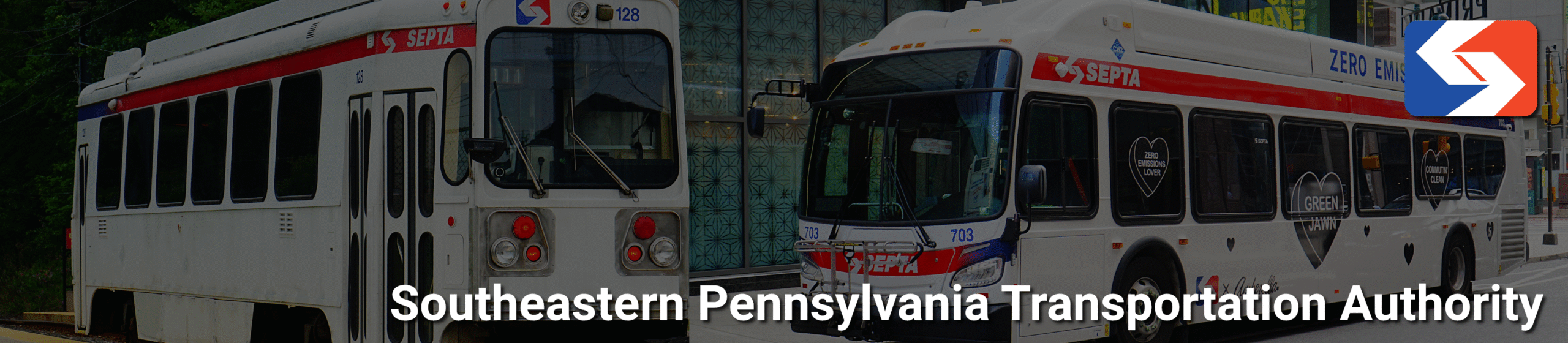

Southeastern Pennsylvania Transportation Authority, or SEPTA for short, operates bus, trolley, trackless trolley, subway/rapid transit, and commuter rail service in the southeastern part of Pennsylvania. With service to Philadelphia, Montgomery County, Delaware County, and Chester County in PA, as well as Delaware and New Jersey, SEPTA is the largest transportation agency in Pennsylvania and the 6th largest in the United States overall.
Headquarters Location
SEPTA Headquarters is located at 1234 Market Street, Philadelphia, PA, 19107

Routes and Service
Between the city of Philadelphia, and its surrounding counties (Bucks, Chester, Delaware, and Montgomery Counties), SEPTA operates over a hundred bus routes, thirteen commuter rail lines under the SEPTA Regional Rail branding, and eight trolley/streetcar lines, five subway/elevated lines, and an interurban line under the SEPTA Metro branding. SEPTA also operates a paratransit door-to-door service called “SEPTA Access.” Of all the operations, SEPTA’s bus operation is the largest, with the regional rail being the second largest.
SEPTA Bus Operations

Hydrogen Fuel Cell Bus Debut
SEPTA is undergoing a massive system change with the bus network, which aims to replace the current numbering. This bus network redesign was previously called “Bus Revolution,” but was renamed to the “Better Bus Initiative” and now simply called “New Bus Network.” Originally, this was supposed to start in November 2024, but it was delayed quite a few times, but kicked back up in Spring 2025. As part of the new network, all of the letter bus routes (except Route K) were changed to numbers on February 23rd 2025. Phase 1 of the actual New Bus Network began on August 23rd 2026.
SEPTA Bus Route Numbering
Routes 1-88 are routes that operate within the city of Philadelphia. This is often referred to as the City Transit Division, and most buses operate within this division. All three trackless trolley lines (59, 66, 75), also operate within this division. Exceptions to this are routes K, and Boulevard Direct.
The Boulevard Direct is a specially branded limited stop route along the Roosevelt Boulevard in Philadelphia, hence being named as such.
On Sunday, August 23rd, 2026, SEPTA introduced two new routes to the city network, routes 72 and 76.
Routes in the 400 series are special school bus routes that operate to Philadelphia area schools but only on days when school is in session. This is often noted by “400 Series” on transit stops, though some bus stops actually list individual Routes.
Outside of Philadelphia, SEPTA operates what is known as the Suburban Transit Division which operates in Bucks, Chester, Delaware, and Montgomery Counties.
- Routes 90-99, 124-125, 131, 132, and 139 operate in Montgomery County.
- Route 92 also serves Chester County
- Routes 124 and 125 also serve Center City Philadelphia
- Routes 103-123, 126 operate in Delaware County
- Routes 104, 106, and 118 also serves Chester County
- Route 123 also serves Montgomery County
- Routes 127-130 133, and 150 operate in Bucks County.
- Route 135 operates in Chester County
There’s also routes in the 200 series that act as bus-to-rail shuttles, and routes in the 300, numbered as such because they use smaller, contracted buses. While the 200 series will be gone in 2027, the 300 series routes will remain.
The 200 series routes operate out of Frontier Depot. They all operate from a Regional Rail station to a specific area, and acts as a “last mile” service. These will be replaced with SEPTA GO service in 2027.
- Route 201 is a bus to rail shuttle serving Fort Washington Station, connecting to the Fort Washington Business center
- Route 204 is a bus to rail shuttle serving Paoli Station, connecting to Eagleview
- Route 206 is a bus to rail shuttle, serving Paoli Station, connecting to Great Valley Corporate Center
The 300 series operate out of Germantown Depot and are contracted to “Trenton-Philadelphia Coach” but use SEPTA Branded buses.
- Route 310 is the Horsham Loop, serving Willow Grove and Horsham
- Route 312 is the Cornwells Heights Parking Lot Shuttle
- Route 316 is the LUCY Loop through University City

Please Donate!
If everyone reading this could donate just one dollar today, we could afford to have Virtual Transit Center on the web for up to 6 years without ads or any other interruption. For those who enjoy Virtual Transit Center and the services we provide, please consider donating. Donate by clicking the PayPal Donate Link to the left, or click here.
SEPTA Bus Connections with other Agencies
SEPTA Makes multiple connections to other transit agencies throughout its operating area. Every SEPTA Route that operates in Center City Philadelphia, connects with PHLASH service (except currently routes 12, 40, and 76) as well as NJ Transit service along Market Street. SEPTA buses also connect with Amtrak at the following stations:
- Ardmore Station
- North Philadelphia Station
- Paoli Station
- Trenton Transit Center
- William H. Gray III 30th Street Station
SEPTA also makes connections with other transit agencies at the following locations:
- Route 93 connects to PART Service in Pottstown
- Route 113 connects with DART First State service at Claymont Transit Center in Delaware
- Routes 124 and 125 connect with NJ Transit bus service along Market Street in Center City Philadelphia.
- Route 127 connects with NJ Transit bus service in Trenton, NJ
SEPTA Overnight Bus Service
SEPTA’s overnight service is referred to as NiteOwls. The current routes with NiteOwl service are 6, 14, 17, 20, 22, 23, 25, 33, 37, 42, 47, 52, 55, 56, 57, 60, 63, 66, 68, 79, 108, 109, and G1. SEPTA also operates overnight NiteOwl service on the B1 and L1 lines as bus service from 12:30am to 5:30am.
SEPTA Transit Bus Fleet Roster
SEPTA’s transit bus fleet consists of mostly New Flyer Buses, with less than a quarter of the fleet being NovaBus built. The best way to learn details and specifics on SEPTA’s fleet such as depot assignments, and exact delivery dates, as well as use an active bus tracking system, it’s best to go on Philadelphia Transit Vehicles.
Every bus in SEPTA’s fleet uses Luminator Horizon destination signs unless otherwise noted.
| Year | Make/Model | Image | Engine/Transmission | Fleet Numbers | Notes |
| 1970 | General Motors T6H-5306A “Fishbowl” | 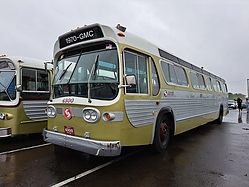 | Detroit Diesel 6v71N Allison VH-9 | 4300 | • Preserved by SEPTA • Not Used in Revenue Service |
| 1974 | Flxible 53096-8-1 “New Look” | 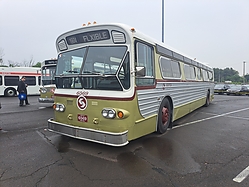 | Detroit Diesel 8v71N Allison VS2-8 | 6569 | • Preserved by SEPTA • Not Used in Revenue Service |
| 2007-2008 | New Flyer E40LFR | 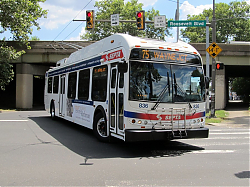 | Cummins QSB | 800-837 | • Electric Trolley Bus |
| 2010-2011 | New Flyer DE40LFR | 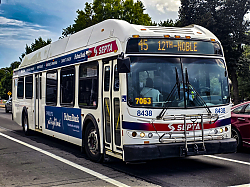 | Cummins ISL9 Allison H-40 EP | 8340-8559 | • mostly retired • currently retiring |
| 2014-2015 | NovaBus LFS 40102 | 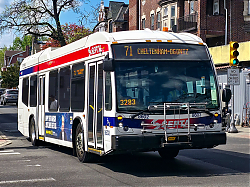 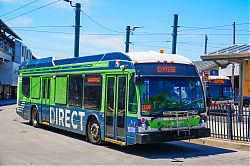 | Cummins ISL9 Allison H-40 EP | 8600-8689 | • 8645, 8680, 8682-8689 Wrapped in a Boulevard Direct livery • Overhauled and refitted with the new Clever Devices system for onboard announcements and displays |
| 2014-2016 | NovaBus LFS Artic 62102 |  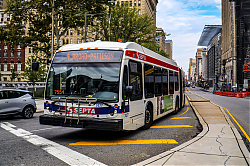 | Cummins ISL9 Allison H-50 EP | 7300-7484 | • Overhauled and refitted with the new Clever Devices system for onboard announcements and displays |
| 2016 | New Flyer MD30“MiDi” | 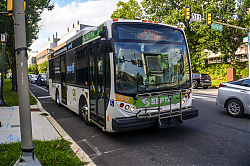 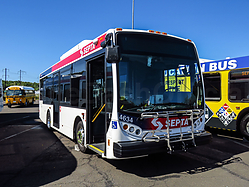 | Cummins ISB Allison B300R6 | 4600-4634 | • Uses Hanover Displays destination signs • 4602-4617 wears a LUCY Livery • Currently being overhauled and refitted with the new Clever Devices system for onboard announcements and displays |
| 2016 | New Flyer XDE40 “Xcelsior” | 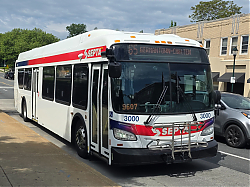 | Cummins ISL9 Allison H-40 EP | 3000 | • Originally numbered 9000 • First bus to be delivered with Clever Devices |
| 2017-2021 | New Flyer XDE40 “Xcelsior” | 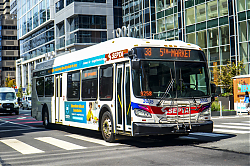 | Cummins L9 Allison H-40 EP | 3001-3524 | • Currently being overhauled |
| 2022-2024 | New Flyer XDE40 “Xcelsior” |  | Cummins B6.7 BAE HybriDrive System 300 ER | 3525-3744 | |
| 2024 | New Flyer XHE40 “Xcelsior” | 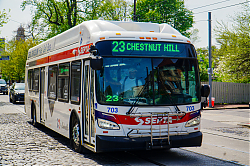 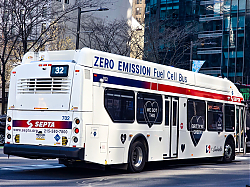 | Hydrogen Fuel Cell Electric Bus | 700-709 | • First Hydrogen Fuel Cell-electric buses in the fleet • Equipped with Luminator Spectrum full color LED signs |
| 2025 | New Flyer XDE40 “Xcelsior” |  | Cummins B6.7 BAE HybriDrive System 300 ER | 3745-3864 | These buses have additional stroller space |
| 2027- | Eldorado Axxess | TBD | TBD | TBD | Ordered with clean energy grant from the FTA |
SEPTA GO
SEPTA GO is the name of SEPTA’s micro-transit service. This operates in the form of “On-Demand Zones” which will replace some bus service in Bucks, Chester, and Montgomery Counties. This service has not yet started, but fleet is on SEPTA’s property as of September 20th, 2025.

SEPTA GO Zones
The On-Demand zones are split up between Bucks, Chester, and Montgomery Counties. There are six zones in total.
- Bucks County SEPTA GO Zones
- Bristol-Croydon-Cornwells Heights
- Replacing service on routes 128 and 133 and discontinued portions of route 130
- Provides connections to bus routes 66, 84, 85, 86, and 129
- Provides connections to the Trenton Line at multiple stations.
- Levittown-Bristol
- Replacing Levittown Service on route 127 and 128
- Provides connections to bus routes 14, 127, and 129
- Provides connections to the Trenton Line at Levittown and Bristol Stations
- Bristol-Croydon-Cornwells Heights
- Montgomery County SEPTA GO Zones
- Lansdale-Telford
- Replacing service on route 132
- Provides connections to bus routes 96 and 94
- Provides connections to Lansdale/Doylestown Line at Lansdale Station
- Norristown
- Replaces service on route 90
- Provides connections to bus routes 93, 96, 97, 98, and 131
- Provides connections to Norristown Line at Norristown Transit Center
- Provides connections to SEPTA Metro M trains at Norristown Transit Center
- Lansdale-Telford
- Chester County SEPTA GO Zones
- Paoli-Great Valley
- Replaces service on route 206
- Provides connections to bus routes 105 and 142
- Provides connections to Paoli/Thorndale Line at Paoli and Malvern Stations
- West Chester-Malvern
- Replaces service on route 92
- Provides connections to routes 104, 105, 135, and 142
- Provides connection to West Chester Transit Center
- Provides connection to Paoli/Thorndale Line at Paoli and Malvern Stations
- Paoli-Great Valley
SEPTA GO Fleet
The SEPTA GO Fleet is all delivered, but is not due to begin operation until February 2027.
| Year | Make/Model | Image | Engine/Transmission | Numbers | Notes |
| 2025-2026 | Ford E450/Coach and Equipment Phoenix | 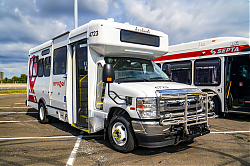 | Ford E450 Chassis | 4700-4724 | • Not currently in service • 4700-4724 currently delivered |
SEPTA Access
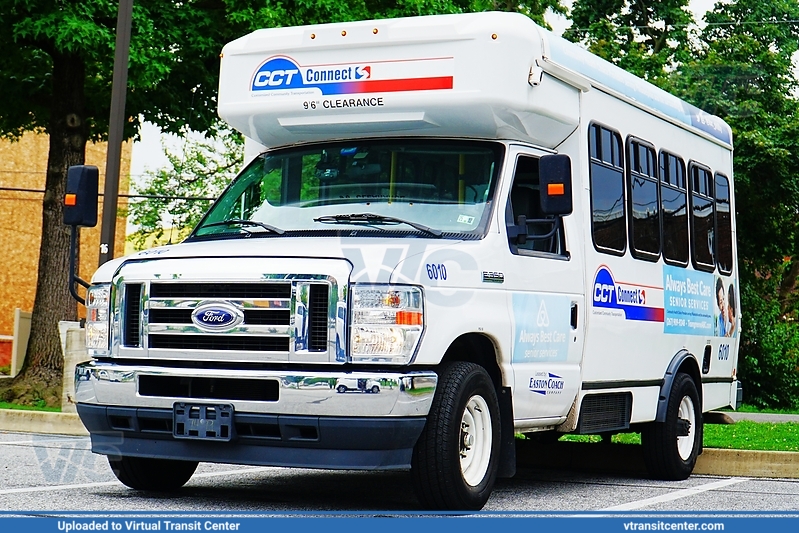
SEPTA Access, formerly known as Customized Community Transit (CCT Connect), is the name of SEPTA’s accessible service. This operates as either a door-to-door/shared ride service for senior riders within the SEPTA service area, or a last mile accessible ride for disabled riders. All SEPTA Access rides must be reserved in advance, and have a 30 minute pick-up and drop-off window.
The last mile service hours parallel that of the nearby bus and Metro routes. If a route runs 24 hours a day, then there is 24 hour service within 3/4 of a mile of said route. If a route does not operate on Sundays, then service will not be provided on Sundays. This service is also limited to the city of Philadelphia, or within a 3 mile radius of the city (but within SEPTA’s service area). With this service, rides are shared and run more like a bus route regardless of destination.
Beginning in August 2024, riders are prompted to download the “SEPTA on Demand” app and request a ride that way, but rides can still be requested through the call center.
Although SEPTA Access is a service owned maintained by SEPTA, the vehicles themselves are leased to, and operated by…
- Easton Coach
- Krapf’s Transit
- Total Transportation Inc
SEPTA Access Bus Fleet
The fleet consists of Ford Econoline cutaway buses with Coach & Equipment bodies. SEPTA has generationally kept the fleet within the same numbering, and replaced them as-needed unlike the transit bus fleet which is replaced every 12 years. These buses are split between several private operators. Most of the fleet still wears the original CCT Connect branding, but new buses delivered in 2025 and onwards will have the “SEPTA Access” branding.
| Year | Make/Model | Image | Numbers | Notes |
| 2016 | Ford E350/Coach and Equipment Phoenix MetroLite |  | 6230-6232, 6236, 6239, 6243, 6255-6274, 6277-6282, 6286-6290, 6300-6362 | 13 seaters mostly retired |
| 2017 | Ford E350/Coach and Equipment Phoenix MetroLite | 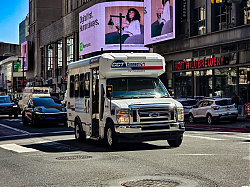 | 6275, 6276, 6283-6285, 6291-6299 | 13 seaters |
| 2016-2017 | Ford E350/Coach and Equipment Phoenix MetroLite |  | 6523-6583 (2016) 6584-6607 (2017) | 7 seaters with extra wheelchair space mostly retired |
| 2018-2021 | Ford E350/Coach and Equipment Phoenix MetroLite |  | 6300-6329 (2018) 6330-6362 (2019) 6000-6011, 6364-6399 (2021) | 13 seaters |
| 2018-2024 | Ford E350/Coach and Equipment Phoenix MetroLite |  | 6608-6660 (2018) 6665-6694 (2019) 6400, 6403-6404, 6407, 6411, 6695-6699 (2021) 6418-6477 (2024) | 7 seaters with extra wheelchair space |
| 2025-2026 | Ford E350/Coach and Equipment Phoenix MetroLite | 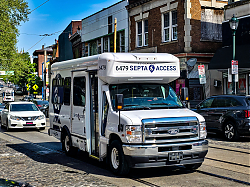 | 6478-6485, 6487, 6488, 6492-6499, 6503-6505, 6507-6523, 6526 | 7 Seaters with extra wheelchair space First fleet with new SEPTA Access Branding |
| 2025-2026 | Ford E350/Coach and Equipment Phoenix MetroLite | 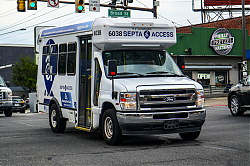 | 6012-6031, 6036, 6038-6094 | 13 seaters |
| 2025-2026 | Ford E450/Coach and Equipment Phoenix |  | 6716-6736 (2025) 6737-6750, 6751, 6753, 6755, 6756 (2026) | 15 seater “Jumbo” units |
SEPTA Metro
SEPTA operates many subway, elevated, trolley, and light rail lines. Until February 22nd, 2025, each line was named and labeled based on where they operate. Subway and Elevated lines were named based on the terminus or main streets of the line. Trolley lines were numbered with their original streetcar numbers.
As of February 23rd, 2025, SEPTA Metro is the branding used for all rail-bound rapid transit lines, including all trolley/streetcar, light rail, subway, elevated, and interurban services. Each letter/color represents where the trunk lines operate. Numbers refer to the specific routes, service level, or spurs. The trunk lines are as follows:
- B lines are subway lines that operate via Broad Street in Philadelphia (Originally Broad Street Line and Broad-Ridge Spur)
- D lines are trolley lines that operate exclusively in Delaware County (Originally Trolley routes 101 and 102)
- G lines are trolley lines that operate on Girard Avenue in Philadelphia (Originally route 15)
- L lines are elevated lines that operate along what was originally known as the Market-Frankford Line
- M lines are interurban transit lines that operate into Montgomery County (Originally Norristown High-Speed Line)
- T are trolley lines that operate into a tunnel through Center City Philadelphia (Originally routes 10, 11, 13, 34, and 36)
Each of the trunk lines have individual lines, represented by numbers, which each operate their own levels of service (e.g. B1 ). The following sections below focus on the individual operat ions of SEPTA Metro, organized by operations type.
SEPTA Metro Trolley Operations
SEPTA currently operates the largest streetcar system in the United States, with 8 routes spread out over 68 miles of trackage. Under the New SEPTA Metro rebranding, these routes are numbered as follows. (Click the route icon to the left of the chart for more information about the related line)
 Delaware County Trolleys | D Lines operate to 69th Street Transit Center, and share a trunk line that parallels Garrett Road between 69th Street Transit Center, and Drexel Hill Junction Station. These operate within Delaware County, hence the label “D” D1 Former Route 101 which operates to Orange Street/Media, via Springfield D2 Former Route 102 which operates to Sharon Hill via Clifton/Aldan |
 Girard Avenue Trolleys | G Lines operate via Girard Avenue in Philadelphia G1 Former Route 15, which operates between Richmond-Westmoreland Loop and 63rd-Girard. This line has trips that operate via Frankford Avenue to Delaware Avenue. |
 Tunnel Trolleys | T Lines operate via the subway surface tunnel through the Center City and University City neighborhoods of Philadelphia. These routes are underground between 40th Street and 13th Street. with the exception of T1 (Route 10) which operates the same tunnel but only between 13th Street and 36th Street in the tunnel. T1 Former Route 10 which operates via Lancaster Avenue to 63rd and Malvern T2 Former Route 34 which operates via Baltimore Avenue to 61st Street T3 Former Route 13 which operates via Chester Avenue to Yeadon or Darby Transit Center T4 Former Route 11 which operates via Woodland Avenue to Darby Transit Center T5 Former Route 36 which operates via Elmwood Avenue to 73rd Street or 80th-Eastwick |
Only routes G1 T1 T3 and T5 operate overnight. No other SEPTA Metro trolley lines operate overnight service. The T lines operate slightly different service patterns overnight as well.
SEPTA Metro Trolley Roster
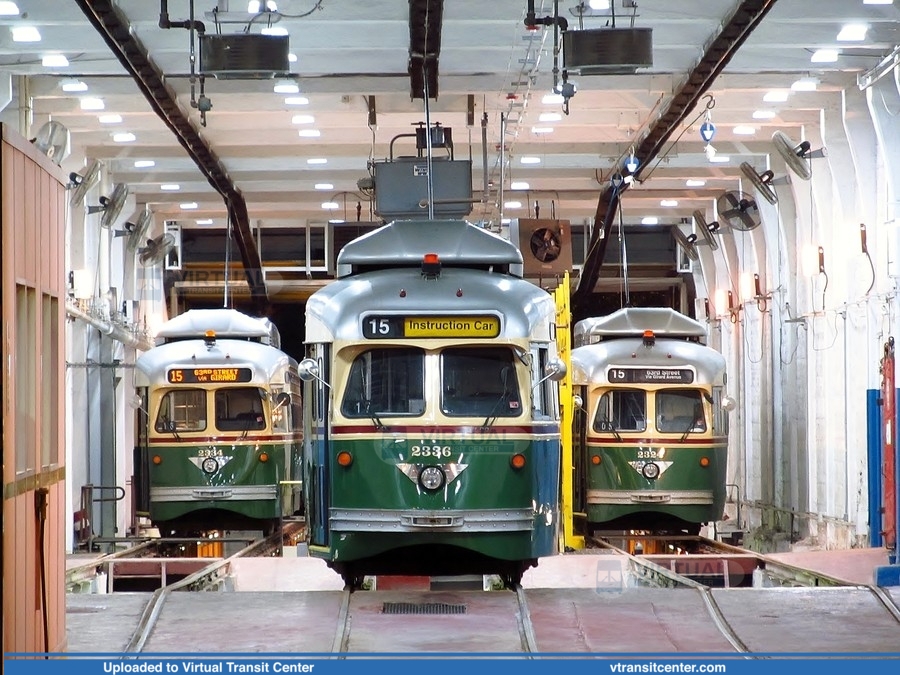
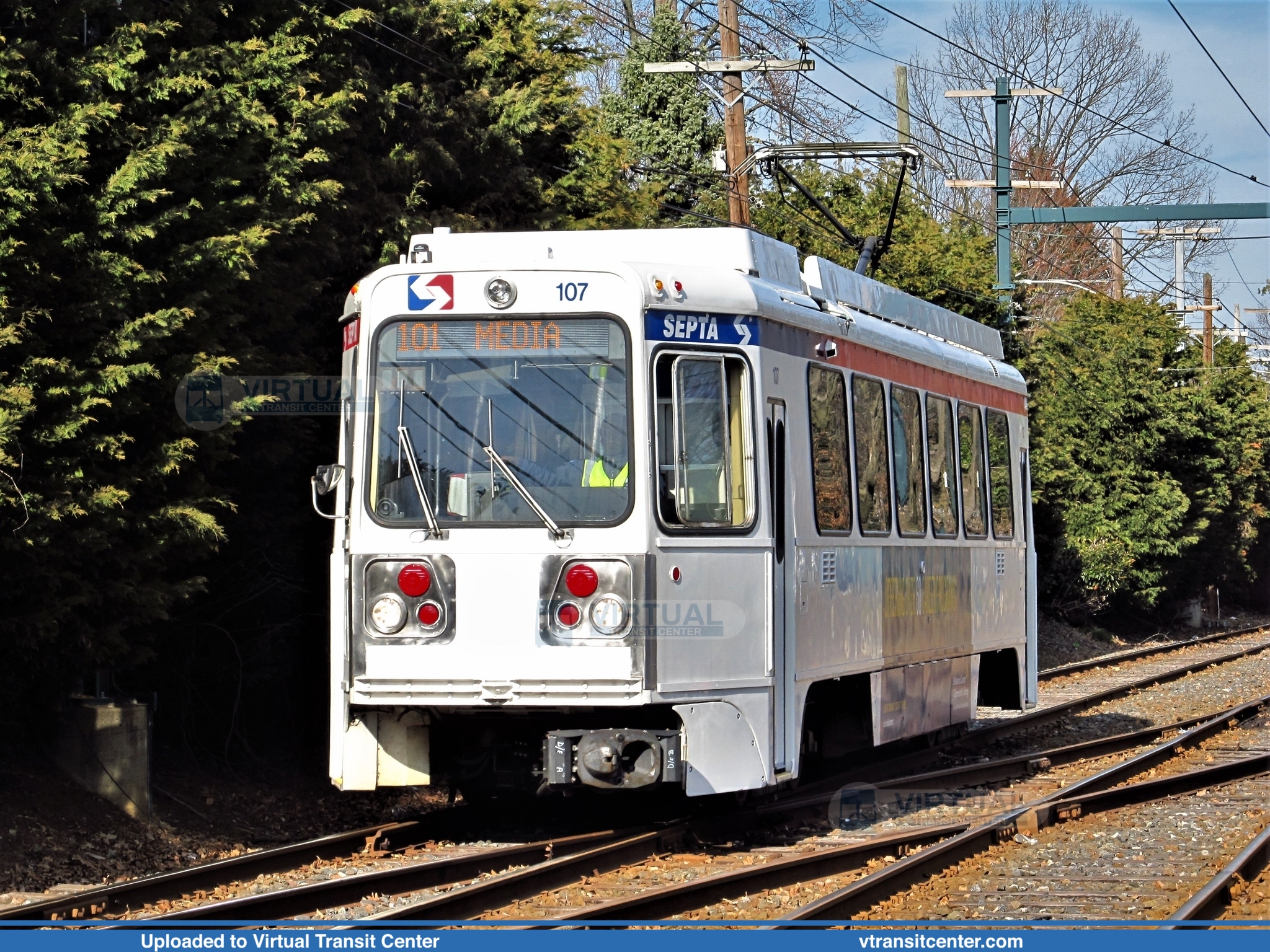
On these lines, SEPTA operates a diverse fleet of trolley cars being either built from Kawasaki or rebuilt PCC cars.
| 1947- 1948 | St. Louis Car Co/ Brookville PCC-II | 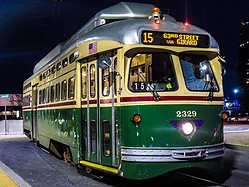 | 2320-2337* |  | • Rebuilt in 2003-2005 by Brookville • Rebuilt again in 2021-ongoing by SEPTA • 2336 will be repainted into a “Gulf Oil” livery • 2323 will be repainted into a “Bicentennial livery for America’s 250th |
| 1980- 1981 | Kawasaki Double Ended LRV |  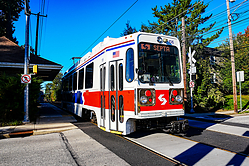 | 100-128 |   | • 102 Long Term Out of Service • 106 wears original 1980’s livery |
| 1980- 1981 | Kawasaki Single-Ended LRV |   | 9000-9111 |      | • 9013 long term out of service • 9000 and 9100 wear original 1980s livery |
| 2027- 2030 | Alstom Citadis |   | 9500-9630** | | • on order • 130 cars (with options of up to 30 more) |

Notes:
*Following Rebuilds between 2002 and 2004 by Brookville, the PCC cars were renumbered into the 23xx series and designated as “PCC-IIs”
** Fleet numbers for the Alstom Citadis are unconfirmed outside of concept art.
SEPTA Metro Subway, Elevated, and Inter-Urban Rail Operations
SEPTA also operates five subway, elevated, and interurban transit lines under the “SEPTA Metro” branding. Four of these lines operate within the city of Philadelphia, two operate into Delaware County, and one operates to Montgomery County. The lines that operate within the city of Philadelphia, are named after their primary streets of operation, but the line that operates to Montgomery County is named after the terminus. Under the SEPTA Metro rebranding, these lines are named as follows.
 Broad Street Lines | B Lines operate via Broad Street in the Broad Street Subway. All B Lines Start at Fern Rock Transit Center, with the exception of most trips on the Broad-Ridge Spur B1 which start at Olney Transit Center. This is the only SEPTA Metro heavy rail line that operates entirely within one county, Philadelphia. B1 Broad Street Line Local making all stops between Fern Rock Transit Center and NRG Station at Pattison Avenue B2 Broad Street Line Express operating to Walnut-Locust Station in Center City, with limited special service to NRG Station at Pattison Avenue B3 Broad-Ridge Spur which operates to 8th-Market via Ridge Avenue and 8th Street. |
|---|---|
 Market-Frankford | L Lines on the current Market-Frankford Line in Philadelphia, operating between Frankford Transit Center and 69th Street Transit Center via Frankford Avenue, Kensington Avenue, Front Street, and Market Street. The last two, western-most stations on the L1 (Millbourne, and 69th Street Transit Center) are in Delaware County. L1 Market-Frankford Line making all stops |
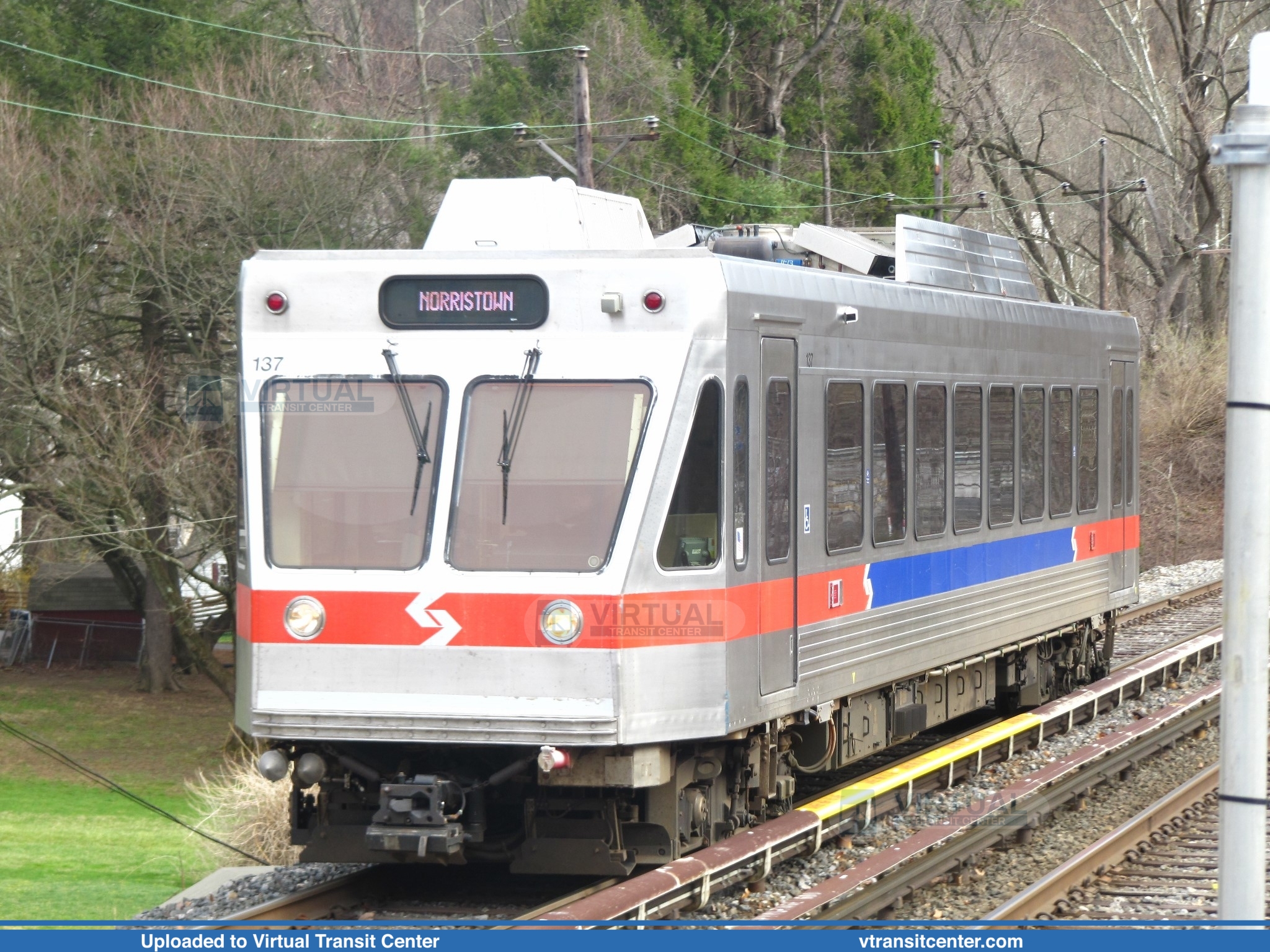
 Montgomery County | M Lines operate on a “high-speed” interurban rail line, which runs between 69th Street Transit Center and Norristown Transit Center via Ardmore, Villanova, and Radnor, and Bryn Mawr. All Stations between Norristown Transit Center and County Line Road Station are in Montgomery County (Hence the name), the rest are in Delaware County M1 Norristown High Speed Line Local makes all stops. |
SEPTA also operates overnight service on the B1 and L1 as NiteOwl bus service from 12:30am to 5:30am. No other B, L, or M service operates during those hours.
SEPTA Metro Subway, Elevated, and Interurban Rail Roster
For the most part, rail cars on used on interurban, elevated, and subway lines are built as either single cars or married pairs. Trains that operate on the B Broad Street Lines are often mixed, as these are the only two lines that share tracks in the entire system.
Broad Street Lines are often mixed, as these are the only two lines that share tracks in the entire system.
| Year | Make/Model | Image | Numbers | Routes | Notes |
|---|---|---|---|---|---|
| 1981- 1983 | Kawasaki Heavy Metro B-IV |  | Single Cars: 501-576 Married Paris: 651-699 | B1 B2 B3 | • operates in five car consists on B1 and B2 • operates in two car consists on B3 |
| 1991- 1993 | ABB Metro N5 |  | 130-155 (all single cars) | M1 | • operates as double or single car trains |
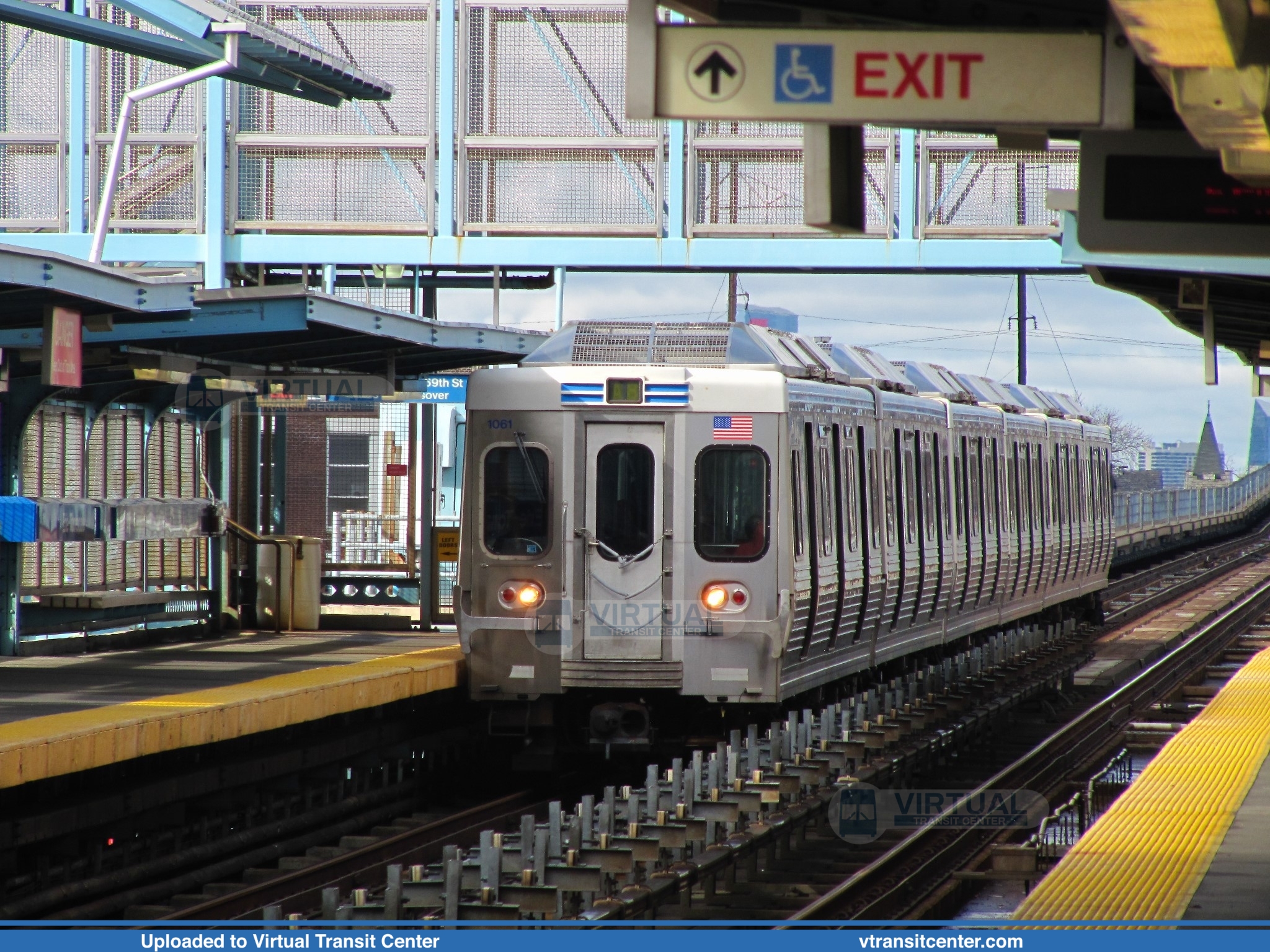
| 1996- 1999 | ADTranz Metro M4 |   | 1001-1032 1035-1220 (All married pairs) | L1 | • operates in six car consists • multiple units retired • cars 1033 and 1034 were converted to work cars |
| 2029-2031 | Hitachi Rail STS Metro M5 |  | TBD | L1 | • on order • first to have open-gangways |
SEPTA Regional Rail

SEPTA also operates commuter rail services known as SEPTA Regional Rail. With Regional Rail, operations are more straightforward. With the exception of the Airport Line, ALL regional rail routes operate from the City of Philadelphia to one of the many suburbs. There are 13 regional rail lines in total, and all of them serve 30th Street Station, and Suburban Station in Center City, Philadelphia.
- Airport Line
- Chestnut Hill East Line
- Chestnut Hill West Line
- Cynwyd Line
- Fox Chase Line
- Lansdale/Doylestown Line
- Manayunk/Norristown Line
- Media/Wawa Line
- Paoli/Thorndale Line
- Trenton Line
- Warminster Line
- Wilmington/Newark Line
- West Trenton Line
SEPTA Regional Rail Passenger Fleet Roster
Similar car types are often mixed between married pairs and single cars for EMUs. All Push-Pull trains operate with one locomotive, one cab car, and a mix of trailer cars. For more information is needed on these consists, use Philadelphia Transit Vehicles.
| Year | Make/Model | Image | Fleet Numbers | Notes |
|---|---|---|---|---|
| 1974- 1976 | General Electric Silverliner IV |    | Married Cars: 101–188, 306–399, 417–460 Single Cars: 276–305, 400–416 | • car 276 wears original “SEPTA/Pennsylvania Railroad” badging • cars 280 and 293 wears original “SEPTA/Reading Railroad” Badging • car 304 wears original “SEPTA/Conrail” Badging • car 401 wears original “SEPTA/Penn Central” Badging |
| 1987 | Bombardier Comet II JWC-1 |  | Cab Cars: 2401-2410 Trailer Cars: 2501-2525 | |
| 2000 | Bombardier “Shoreliner III” SEPTA-II |  | 2550-2559 (All trailers) | |
| 2010- 2011 | Hyundai-Rotem Silverliner V |  | Single Cars: 701-738 Married Cars: 801-882 | |
| 2017- 2018 | Siemens ACS-64 |  | 901-915 |
Sources: